EU Launches First CBAM Webinar — And 3,500 Attendees Tell You Everything About the Confusion Ahead
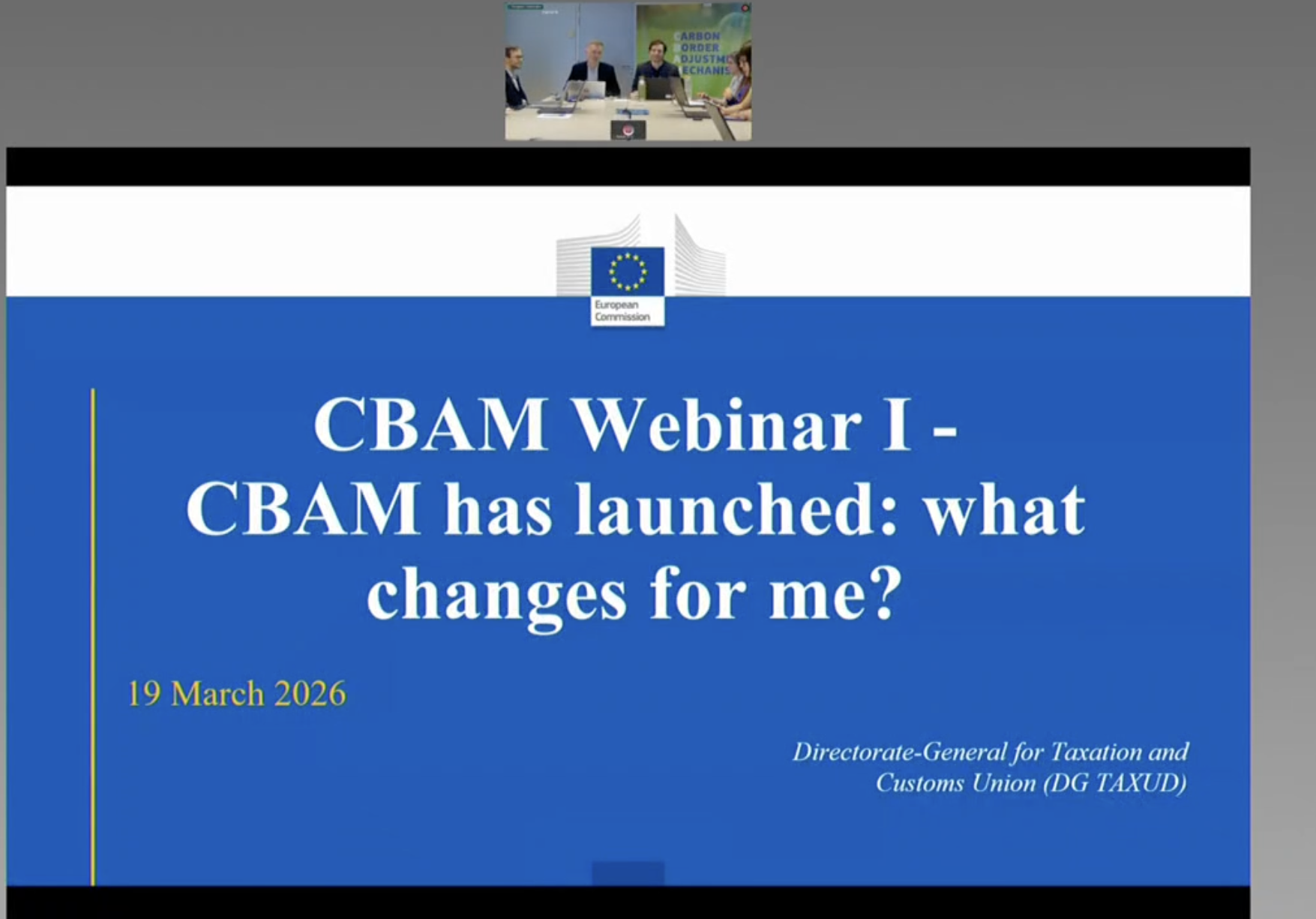
On 19 March 2026, the European Commission's Directorate-General for Taxation and Customs Union (DG TAXUD) held the first in a new series of CBAM information webinars. The session, titled "CBAM Has Launched — What Changes for Me?", attracted more than 3,500 registered attendees.
That number is significant. It is not a sign of enthusiasm — it is a signal of widespread uncertainty. With the definitive CBAM regime now in force since 1 January 2026, a packed virtual room of importers, customs representatives, and advisors tells you one thing plainly: much of industry is still scrambling to understand what compliance actually means in practice.
WHAT THE COMMISSION COVERED
Three DG TAXUD experts addressed the session across three headline topics: the 31 March 2026 authorised declarant application deadline, the methodology for calculating embedded emissions, and — most critically — the process for verification and accreditation.
On the authorised declarant deadline, the message was clear: any importer of CBAM goods above the 50-tonne annual threshold who had not yet applied needed to act immediately. Applications registered in the CBAM Registry by 31 March 2026 allow businesses to provisionally continue importing while their application is reviewed. Miss that date, and the risk of customs disruption becomes very real.
On emissions calculations, the Commission reinforced a point that carries serious financial weight: businesses relying on default values rather than verified actual emissions data face substantially higher certificate costs. Default values were revised downward in late 2025, meaning the penalty for not having your own data in order has actually increased.
VERIFICATION: THE BIG ISSUE — AND A CLEAR TIMELINE
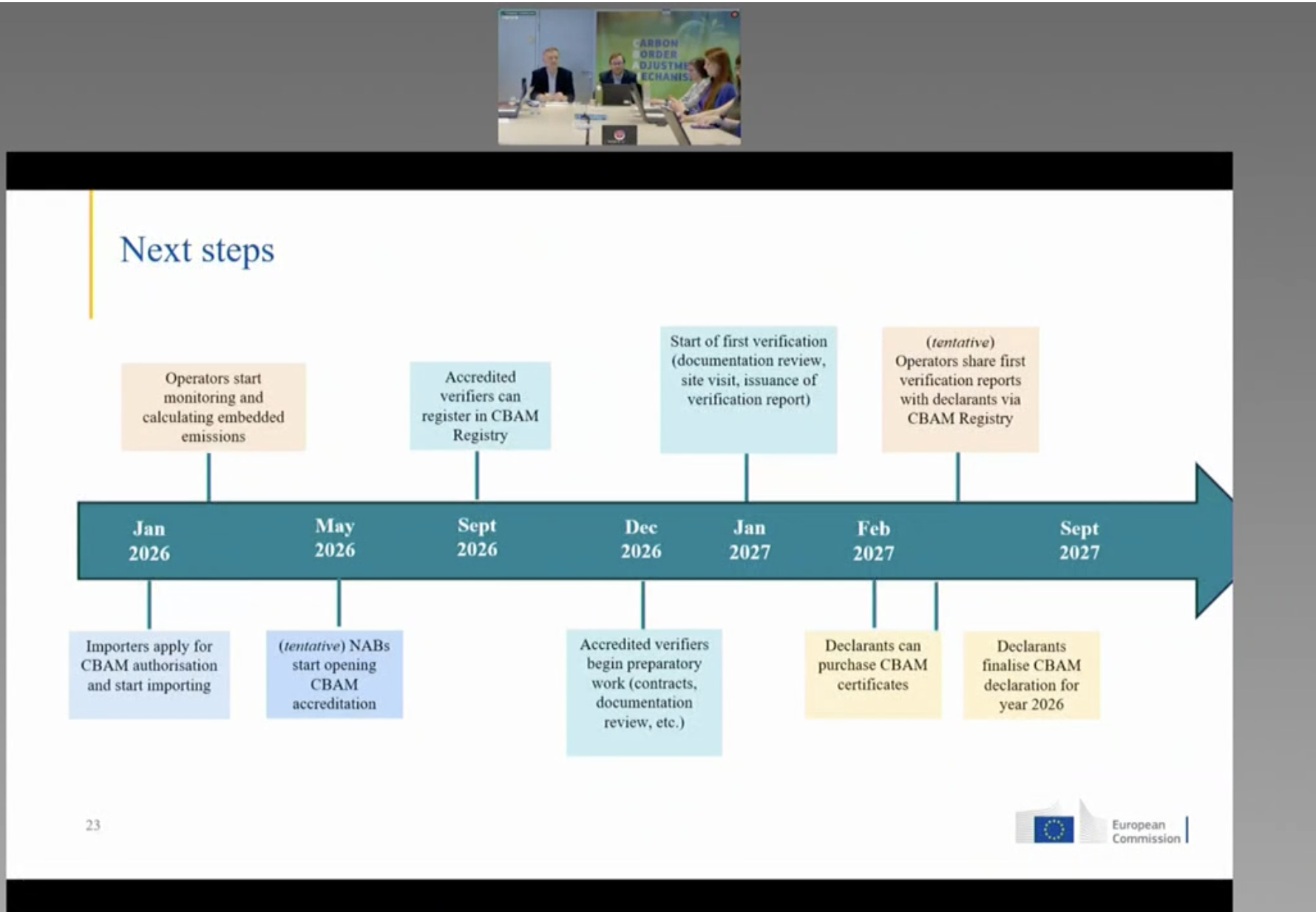
Verification dominated the session, and rightly so. It is the element where confusion is deepest and where the consequences of being unprepared are most costly. The Commission used the webinar to set out the key milestones for the first time:
31 March 2026 — Deadline to apply for Authorised CBAM Declarant status
May 2026 — Applications for verifier accreditation open. Independent bodies begin the process of receiving a licence to audit CBAM data.
January 2027 — Mandatory in-person site visits by accredited verifiers begin.
Q1 2027 — First verification reports expected to be available.
30 September 2027 — First annual CBAM declaration due, covering full calendar year 2026 imports, with verified emissions data required.
Under the definitive regime, embedded emissions data submitted in CBAM declarations must be verified by an independently accredited verifier. Where verified data is unavailable, importers are forced back onto default values — a position that is both commercially damaging and strategically weak.
WHY PRE-VERIFICATION PREPARATION IS ESSENTIAL — RIGHT NOW
"Verification does not begin with the verifier's site visit in January 2027. It begins with the quality of your data today."
This is the critical point that the Commission's timeline, read carefully, makes plain. Accredited verifiers will only start taking on assignments once applications open in May 2026. Capacity in that market will be finite — and demand will be high. Businesses that have not yet begun organising their emissions data, establishing supplier data flows, and understanding what a verifier will actually require are already behind.
Verification covers a specific set of requirements: the methodology used to calculate embedded emissions, system boundaries, production route allocations, precursor emissions for complex goods, and direct and — where applicable — indirect emissions. Verifiers apply a 5% materiality threshold. Fall outside it, and you revert to default values regardless of the work done.
The message from the Commission is not new, but the timeline is now fixed. There is no further transitional grace period. The 2026 calendar year is the first compliance year, and the data being collected today is the data that will be verified.
WHAT THIS MEANS FOR UK BUSINESSES
While CBAM is an EU mechanism, its reach extends directly into UK supply chains. UK manufacturers and producers exporting to the EU in CBAM-covered sectors — steel, aluminium, cement, fertilisers, hydrogen, and electricity — need to understand the verification requirements their EU customers will be placing on them. Those unable to provide verified emissions data will find their products become less competitive as EU importers opt for suppliers who reduce their certificate exposure.
The 3,500-strong audience at this webinar is not a cause for reassurance. It is a reminder that the majority of affected businesses are still in the awareness stage, not the action stage. For those willing to move now, that gap is an opportunity.